
Stay ahead
Train news & alerts
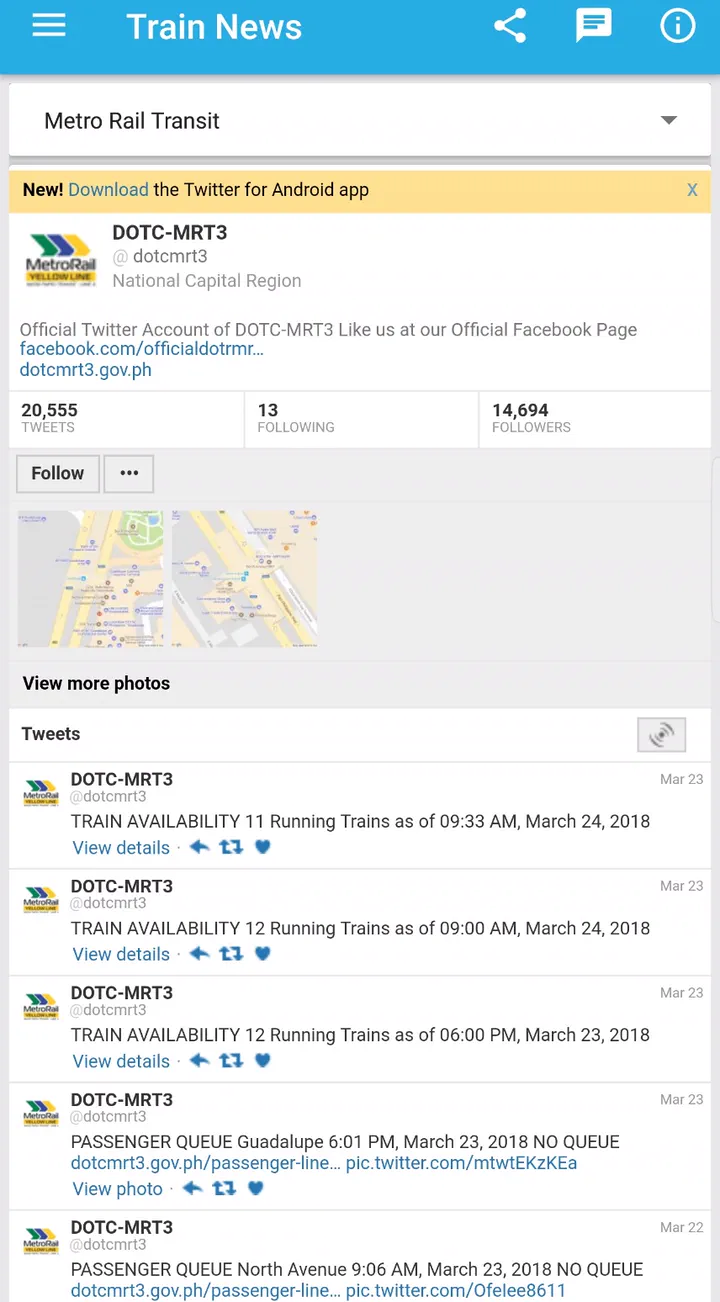
Official advisories and the operators' own feeds landed in one timeline, with push alerts behind them. Commuters found out a line was suspended before they left the house, not after queuing at the turnstile.

Relaunch in progress
TrainsPh turned thousands of Metro Manila commuters into each other's early warning system: live station CCTV, crowd reports, fares and rail news for LRT‑1, LRT‑2, MRT‑3 and PNR. We are building the next one.
Scroll
About
Nobody publishes how long the line at Doroteo Jose is right now. The commuters standing in it did, and we are building the version that does it again, better.
TrainsPh is a crowdsourcing project for Metro Manila's rail network. The idea has not changed since the first version: commuters report what they are actually seeing, how packed a station is, whether a line has stalled, which platform is moving, and everyone else gets it in seconds.
The more people who tap the rating bar, the sharper the picture becomes for the next person.
Around that sits everything you would otherwise open four apps to find: live CCTV of ticketing areas and platforms, push alerts for rail news, your distance from every station on the line, fare and travel-time estimates for both Single Journey and Stored Value tickets, and a chat where commuters warn each other before committing to a queue.
The first version shipped in 2017 and reached thousands of daily commuters before it came off the store. The next one is in build, for a rail network that has grown a great deal since, and for the same people standing on the same platforms.
CCTV footage of train stations is provided by the Department of Transportation. TrainsPh is a voluntary, non-government project that exists to support Metro Manila commuters.
Accuracy comes from volume. Every rating a commuter submits sharpens the congestion score for the next one.
Congestion, chat and news alerts land as they happen, not on the next scheduled refresh.
No fare, no agency. A volunteer project that leans on public data and the people who use it.
Conservative on data and memory, because it has to work on the phone you already have, on the signal you already have.
Features
Six things the first version got right, on the screens commuters actually used. Every one of them carries into the rebuild. This is the floor, not the ceiling.
Stay ahead
Official advisories and the operators' own feeds landed in one timeline, with push alerts behind them. Commuters found out a line was suspended before they left the house, not after queuing at the turnstile.
Orientation
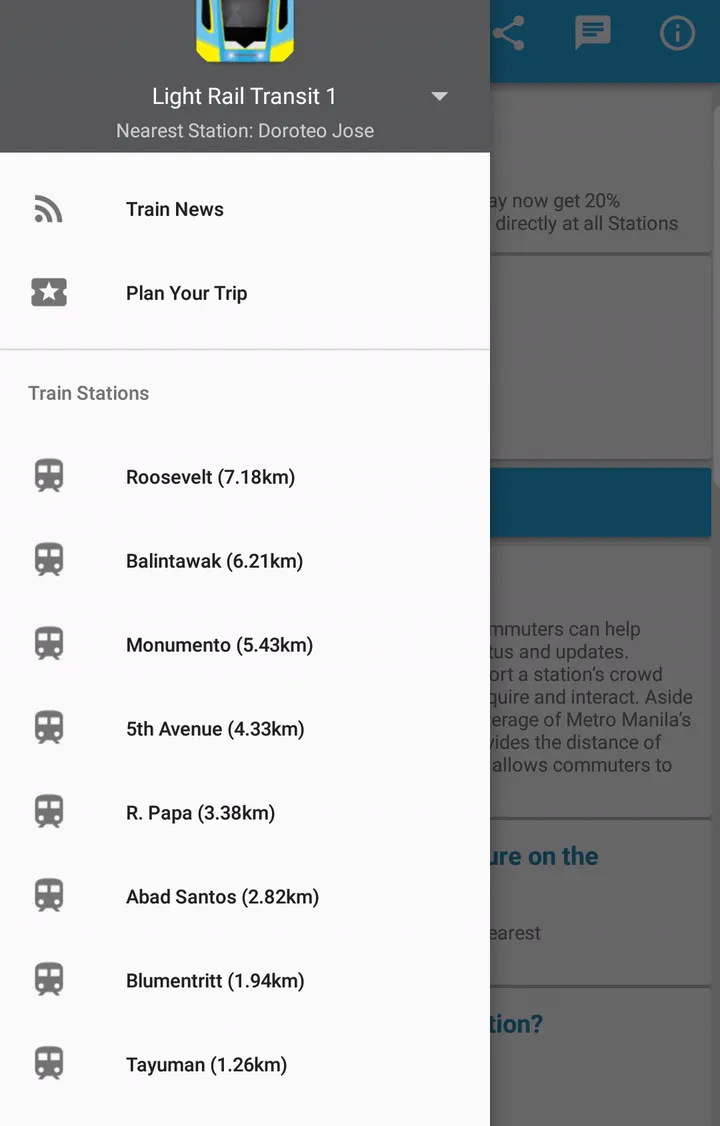
Every station on the line, ranked by distance from where you stood. It turned “which entrance?” from a guess into a glance, and made the network navigable for people who did not grow up on it.
See it yourself
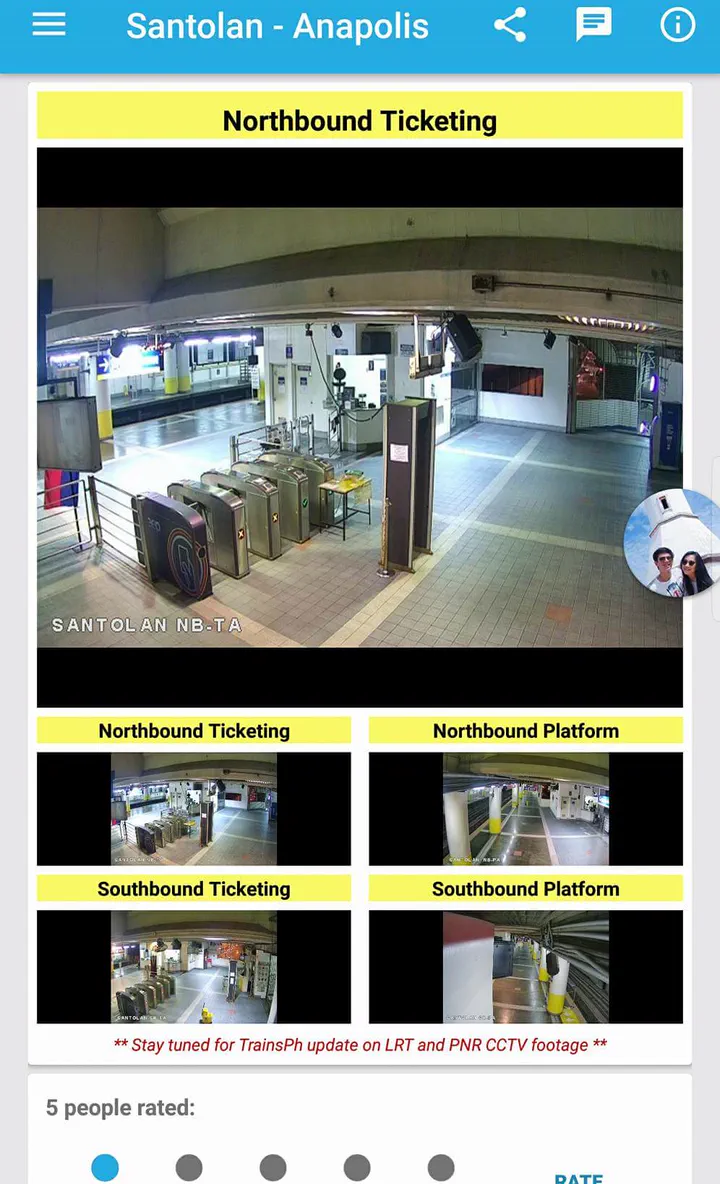
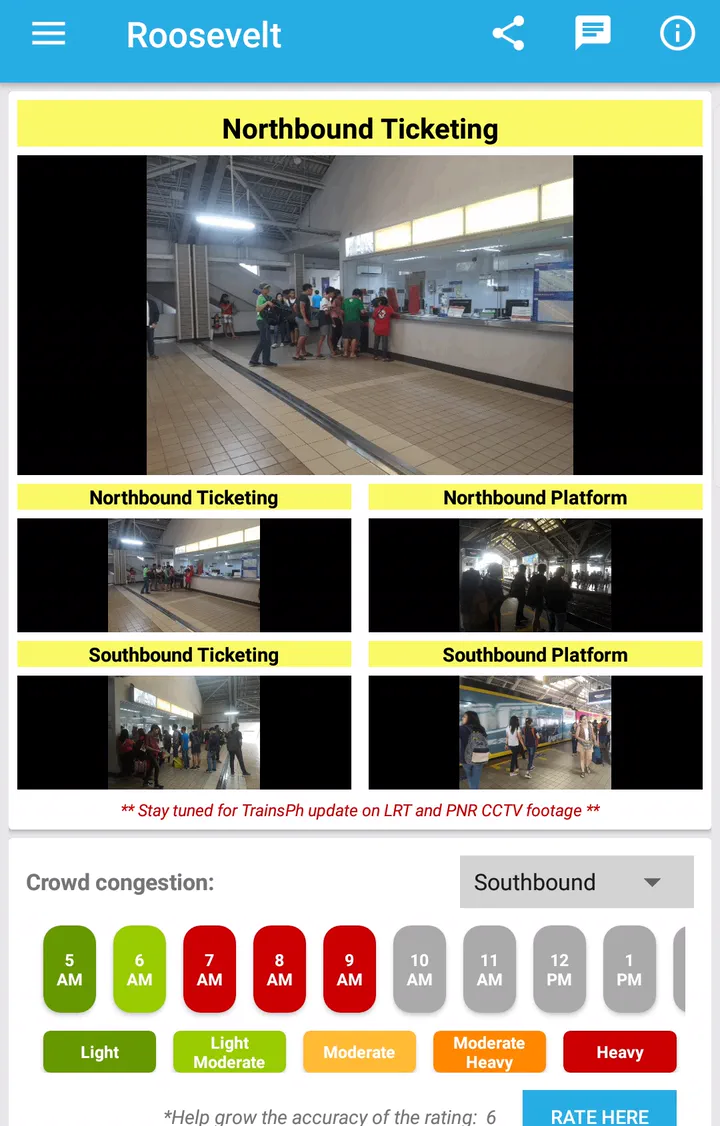
Ticketing areas and platforms, northbound and southbound, straight from the Department of Transportation's cameras. For the first time a commuter could see the queue before committing an hour to it. The feeds were later taken down, and this is the one feature we cannot yet promise to bring back.
Rate to share
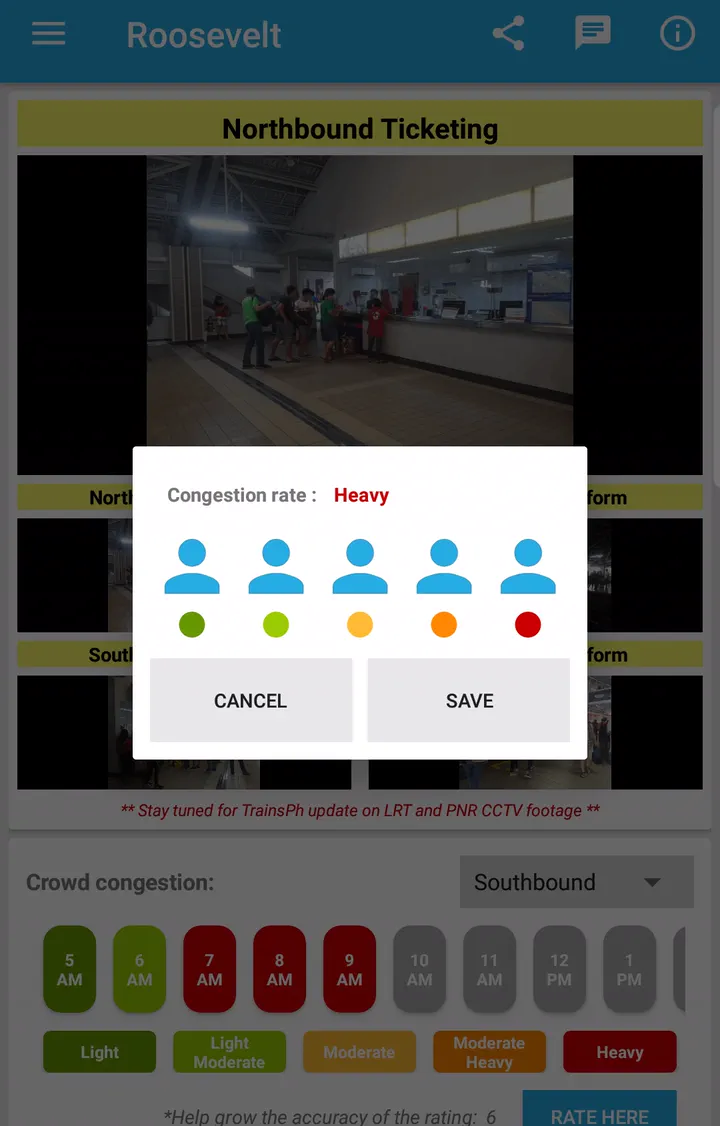
One tap reported how bad it was right then. Ratings pooled per station and per direction, and the score sharpened as more people weighed in. That loop is what made the whole thing work.
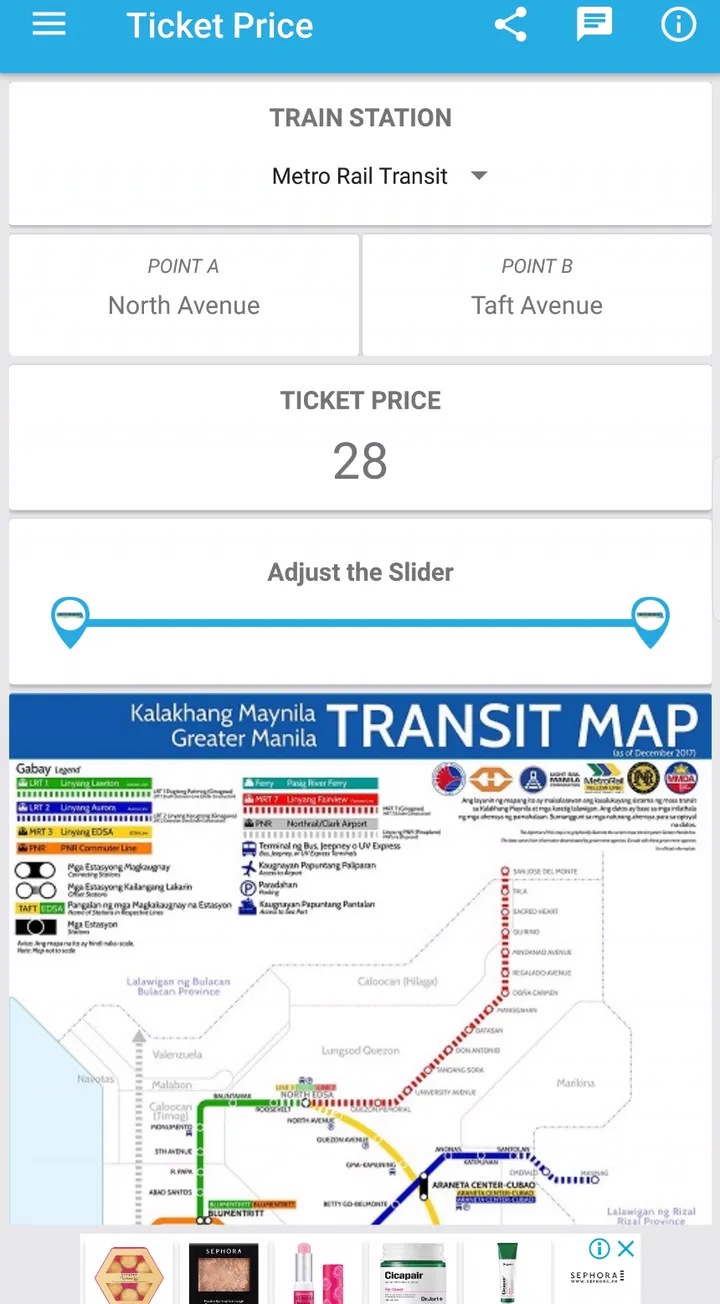
Plan your trip
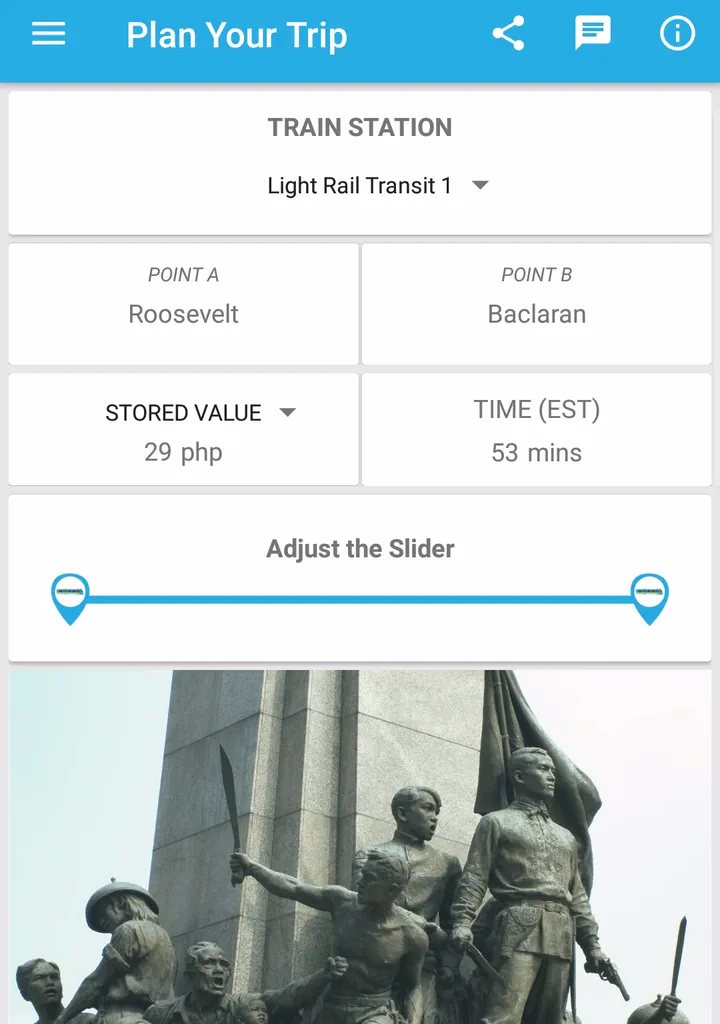
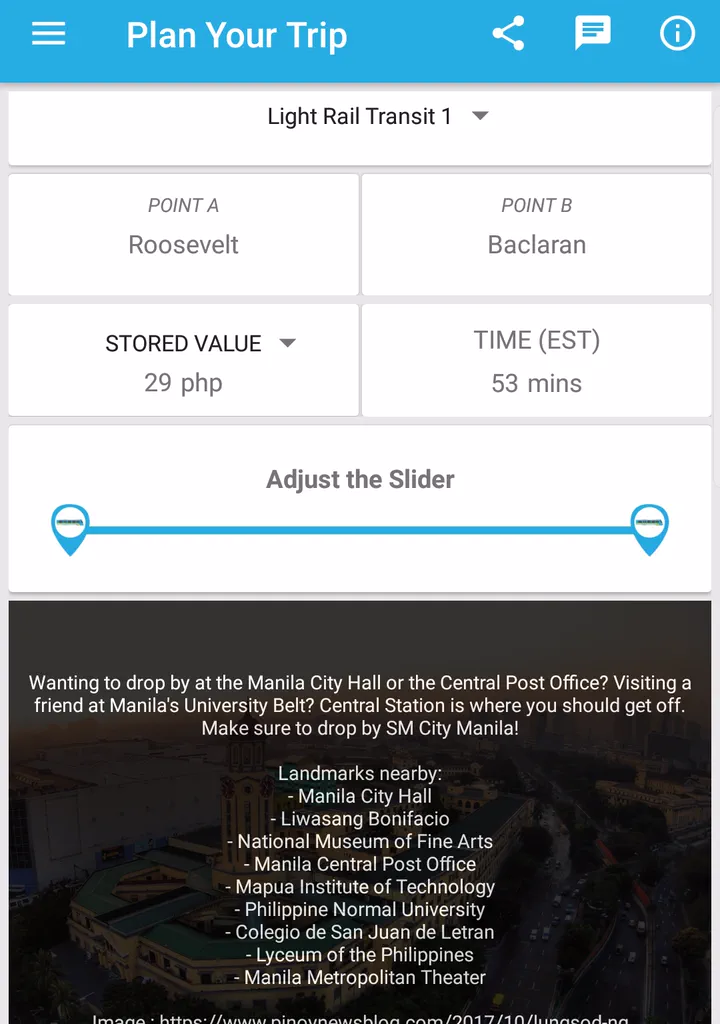
Two sliders set origin and destination and returned the exact fare for Single Journey and Stored Value tickets, the estimated travel time, and the landmarks around each stop. Useful for budgeting a trip, not just surviving one.
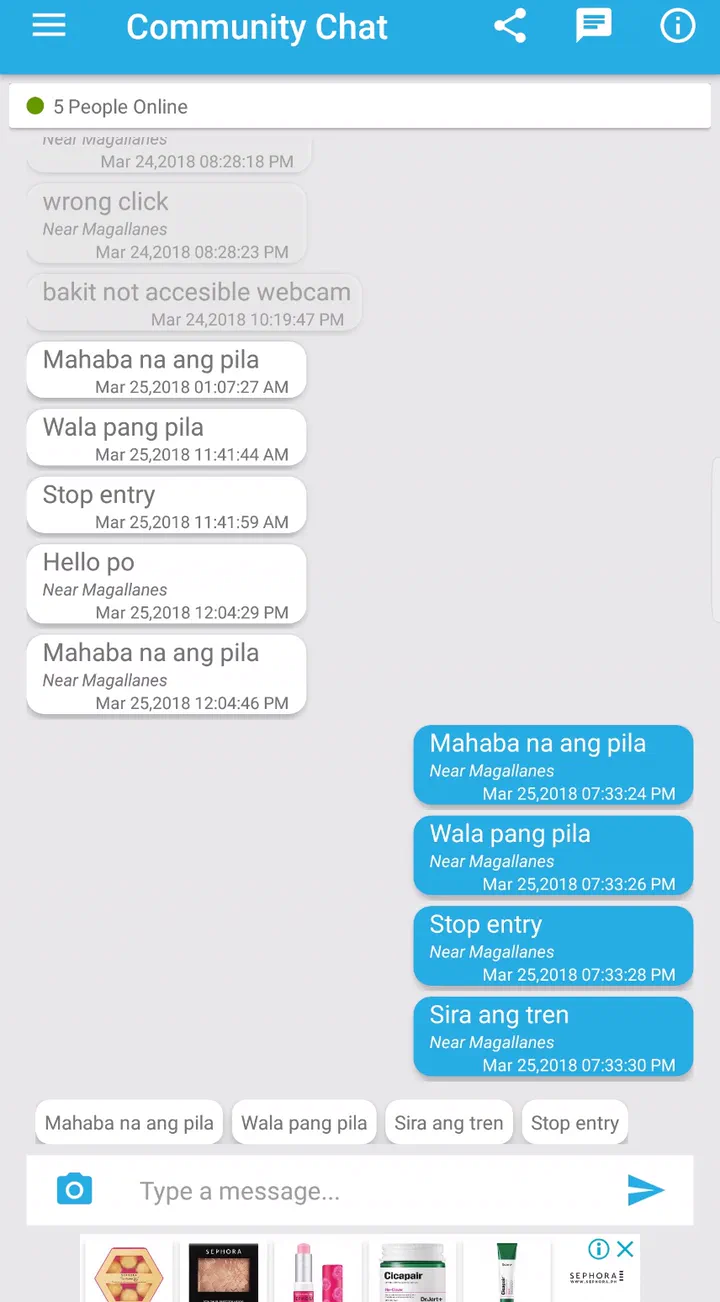
Ask anyone
A live room of commuters on the same lines. "Mahaba na ang pila." "Wala pang pila." Strangers warning strangers, in the only language that mattered at 6pm. The kind of update no schedule will ever give you.
The network
Fifty-one operating rapid transit stations across three Metro Manila lines, plus the two PNR commuter services. This is the map the relaunch has to cover, considerably bigger than the one the 2018 app shipped with.
North-South Commuter Railway: 147 km, Clark to Calamba, replacing the suspended PNR Metro Commuter. Partial Clark-Valenzuela service is targeted for the end of 2027.
MRT Line 7: North Avenue to San Jose del Monte, Bulacan, connecting at the North Triangle common station.
Metro Manila Subway: the country's first underground line, Valenzuela to NAIA via Ortigas and Taguig.
LRT-1 Cavite Extension Phases 2 and 3: Las Piñas, Zapote, Talaba and Niog, carrying Line 1 into Bacoor by 2031.
LRT-2 West Extension: Tutuban, Divisoria and Pier 4, taking Line 2 to the Manila port area.
Network status as of September 2026. Rail service in the Philippines changes often. Suspensions, reopenings and renamed stations are the norm, which is exactly the problem TrainsPh exists to solve.
Traction
Where TrainsPh stood when it was presented at Hackatren.
0k
Registered commuters
0%
Growth in monthly active users
0%
Growth in yearly downloads
0k
User sessions
0%
Crash-free users
0/5
Google Play rating
Figures as reported at the Hackatren showcase, 15 July 2018.
Screens
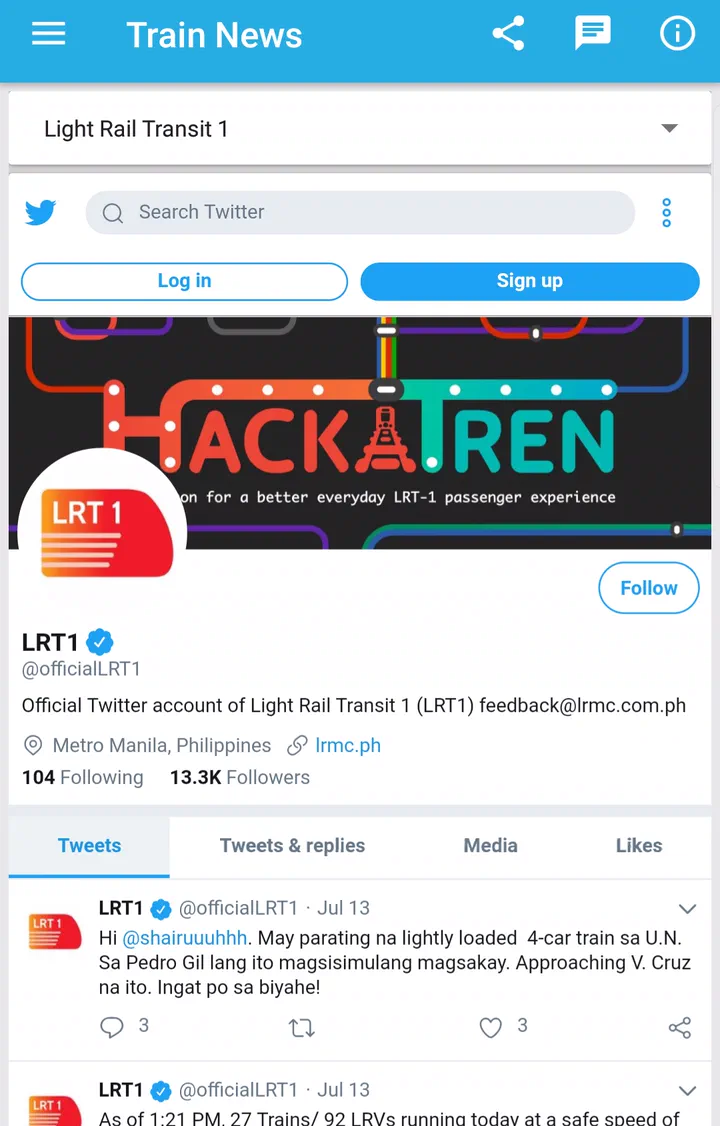
Ten screens from the Android build. No mockups, no redraws.
Story
There was no market study and no pitch deck. There was this, most evenings, for years.

Commuting around Metro Manila has always been the hardest part of the day, especially from the far north or south. There is no dependable departure time, no dependable arrival time, and a queue nobody can predict.
One rush hour, stuck in exactly that, we asked what we could do with the thing we were actually good at, building software, to give our fellow commuters back some of their evening. Less travel time, less money, and a safer trip. That question became TrainsPh.
To help commuters get home easier and be more productive, and to be a platform where technology genuinely contributes to the daily commute.
We want the community to make full use of crowdsourcing rather than waiting on the resources the government has available. The goal was never just an app. It was proof that commuters can be an information network for each other.
The hard part
TrainsPh ran on public data and volunteer time, and it was never an official anything. Not for want of asking.
In July 2018 the app was pitched at HACKATREN, the hackathon run by Light Rail Manila Corporation around LRT Line 1, with the Hub of Innovation for Inclusion and De La Salle-College of Saint Benilde. It finished as a finalist.
Around that came everything else you do when you want a side project taken seriously: the emails, the meetings, the follow-ups. To operators, to agencies, to anyone who might turn a working app already used by thousands of commuters into something officially supported.
None of it landed. No partnership, no data agreement, no endorsement. The app kept running the only way it could, on crowdsourcing and goodwill, until it came off the store.
The rebuild starts from the same position. If that changes, good. If it does not, it gets built anyway.
The CCTV is the clearest case. Those feeds were the most useful thing in the app, and at some point the Department of Transportation took them down. We were never told why, and we still do not know. Getting them back, or finding another route to the same information, is part of the rebuild.
Light Rail Transit Line 1, 15 July 2018. The furthest the project got toward anything official.
Station CCTV came from the Department of Transportation. The access was public and never formalised, so when it went, it went.
Thousands of commuters used it for years without a single institution signing off on it.


The coverage came. The partnership did not.
Next stops
The roadmap set out at Hackatren, and still the plan for the relaunch.
Show the next train approaching your station, not just the state of the platform.
Read congestion from the existing CCTV feeds with computer vision, so the score holds up even when nobody remembers to tap the rating bar.
Turn the landmark guide into a proper route for visitors seeing Metro Manila by rail.
Extend beyond LRT-1, LRT-2, MRT-3 and PNR as the network grows.
Proper operational tooling behind the app, and a lighter, faster client in front of it.
Who we are

Founder, TAIO Labs
Nico has been building software since 2015, mostly across fintech and retail. In 2018, the same year TrainsPh went to Hackatren, he started TAIO Labs, the studio he still runs.
Before that: mobile developer on medical software in Belgium, engineering roles at one of the country's leading fintech companies and later at a Fortune 500 payments technology company, and an interview with James Deakin on CNN Philippines about TrainsPh. Today he is senior manager for solutions architecture, and is taking an MBA at the Ateneo Graduate School of Business.
TrainsPh is where the pattern started, and it is the one he keeps coming back to: find an ordinary problem nobody has got around to, then build the thing that fixes it.

Thanks
TrainsPh got built because these people gave their time to it. The first version owes them, and so does the next one.
The app is off the store while it is rebuilt. Leave your name and we will tell you the day it returns, or just say hello, tell us which line you ride, and what you want it to do this time.
No mail app? Email taioappsdevelopment@gmail.com directly.